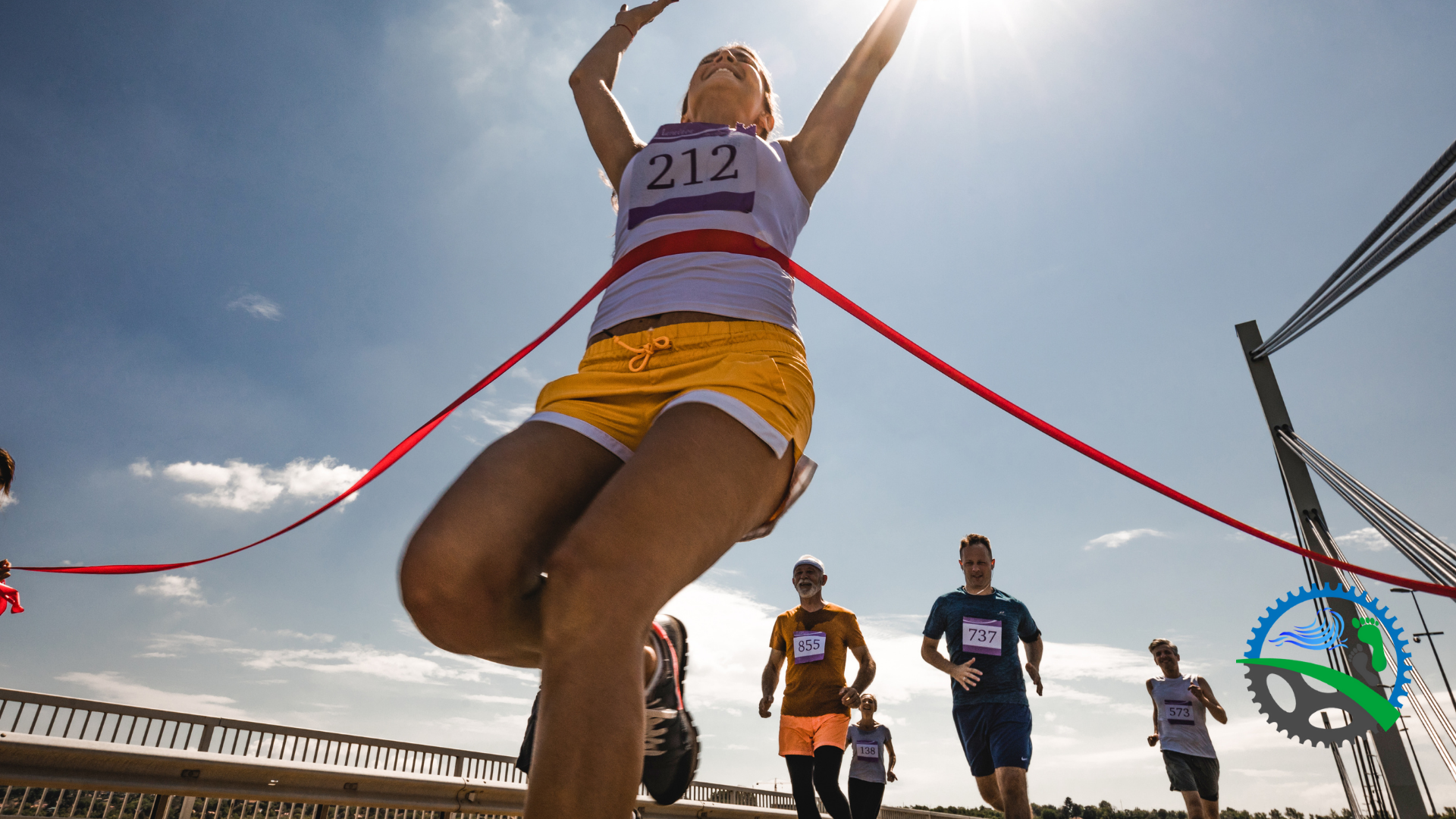
This is a 50K Ultra Marathon Training Plan for beginners or anyone whats to make sure they get to the start line with confidence and the finish line with a smile.
A 50K Ultramarathon is a significant milestone for any runner.
Still, it can be daunting for a first-timer.
It's achievable with the right approach, consistent pace, and dedication.
Start Training for Your 50k Today
26-Week 50k Ultra Training Plan Pdf
Get your Free Ultra Marathon Training Plans via our Google Drive. Convert to a PDF or EXCEL.This plan is in a Google Doc.This training plan is for runners and walkers who want to get to the start line prepared and cross the finish line with a smile.
First NameSubscribe Now
Joining our mailing list to receive valuable insights from Coach Steph, along with training tips and updates on our programs and apps. By providing your email address, you consent to receive communications from stephanieholbrook.com. You can opt-out at any time.
With a marathon under your belt, the exhilaration, relief, and muscle fatigue raise the gnawing question: "What's next?" Ultrarunning presents the ultimate endurance challenge for runners seeking to push their limits.
**What is Ultra Running? How far is 50k, and how many miles is a 50k?**
The answer is straightforward: 50k is equivalent to 31 miles. Now for the next question: would you like to run that far?
If yes, then let's continue.
**Why do you want to run your first ultramarathon?**
**What's driving you to take on the 50k distance? **
Everyone has their own drive as to why they decide to train for an ultramarathon. Have you run a marathon before? Or another trail race? Is the openness of the ultrarunning world appealing to you? You can test yourself. See what you are capable of.
The First Step is WHY? ** **
When I decided to run a 50k, my motivation and drive were mostly to get out of my comfort zone.
So, let's find your motivation and your driving point. What is it for you? In any case, you'll inspire your family, friends, and the people around you and make them really proud…so that's a starting point.
Our Ultrarunning guide is tailor-made for determined runners.
It prepares them for the 50K (approx. 31 miles) distance, provides tips to boost stamina, and inspires them to push even further. Brace yourself for the ultimate test of endurance, be it the infamous 50—or 100-mile races. Get ready to challenge yourself!
Embarking on a 50K training journey can be both challenging and rewarding. If you're an experienced ultramarathoner, leap with a 16-week build-up to complete your first 50 K.
Endurance sports are far from a one-size-fits-all approach. As you increase your running distance, learn to run while tired, and adapt to your running partner's nutritional needs, remember that your success depends solely on you.
Prescribed long runs, ranging from 10 to 26 miles, should be spaced out every six to 10 days.
Since most 50K trail races require specific terrain adherence, trail runners should search for comparably demanding routes to train. Trail runners should improve their aerobic capacity, strength, and mental endurance and ease back on ultimate speed in ultra runs.
**If this is your first 50k, choose a race that's comfortable for you. **
There are so many types of 50 km races. Find a race that fits your personal running style. There are so many ultra and half marathons too to choose from. There is likely an event near you that can fit your running style.
Hilly courses. Advantages - Hilly is that there is variety and a change of pace. The downside is that you are going to be slower.
Key Takeaway
Remember that depending on an ultra-marathon race's terrain or elevation gain, can take as much as 20-50% longer than a flat race.
#### Check out the details on the race website to get the details on the event. Most events have a race bible.
It would be helpful if you did much of your training where your race will occur. If you are doing a trail 50K, you should be doing trail runs.
If it is a road 50k, train on the road. Get as many runs done on similar or specific terrain for the best results as possible.
**How to Pick the Best Ultras for Beginners**
Your first ultra will be hard. Picking a race with little elevation change and nicely packed dirt will make it easier.
My first ultra was the Pemberton Trail 50k. As races go, starting your first ultra close to home is best.
It makes the logistics more manageable and allows you to run on familiar trails without worrying about hotel rooms, temperature changes, and travel.
What to Look For in Your First Ultra?
Elevation Gain - pick races with less than 3000 feet of elevation gain.
Runnability: Check out other runners' race reports or the trail yourself. Note how easy the technical terrain really is to run on.
Temperature: Pick an event that won't be uncomfortably hot or cold.
Race Support - Another race report item. How much support did the race directors have on the course? Look at how many aid stations are on the course and what food each aid station include.
Training Program for Your First Ultra Marathon
Look no further! It's important to note that before jumping into the plan, you should read the entire post. Doing so will help you assess if you're prepared to begin training, enable you to take your own schedule into account, and provide a detailed overview of all the scheduled workouts.
Designed specifically for runners with a solid running base but new to the ultra and ultramarathon distances, this plan has been crafted to help you cross the finish line. Regardless of your training or athletic experience level at ultra distances, this plan can help you achieve your 50K goals.
Suppose you are interested in starting this plan. In that case, it is recommended that you have a long-running history - a minimum of 1 year of consistent running without any significant injuries or issues.
Although this does not have to involve intense training, long-distance running, or participating in any races, you must be comfortable in your running stride and capable of running at least 10-12 miles.
If you plan to participate in a trail 50K (as many do), having some experience in trail running is crucial. Although road runners can always make the transition, consider that pacing on a trail can differ considerably from the same pace on the road. You may require at least a month to adapt to the distance on the trails before embarking on this plan.
Not Ready for a 50k UltraMarathon Training?
If you still need to build fitness to run 10-12 miles comfortably, work up to this before starting this beginner road marathon or ultramarathon training plan.
For example, you could use our 8-week half marathon training plan to build up to the 12-mile distance and then segue that into this full-strength interval training plan the first week afterward.
**WORKOUT DESCRIPTIONS**
Here is helpful information regarding the schedule, types of training runs you'll complete, and guidelines for pacing.
BEGINNER 50K PLAN
How about training for your first total race distance ultra or ultramarathon? With this beginner's 50 K training plan, you can expand your running base and get ready to tackle this challenge in over 4 months. You'll love checking this 31-mile-long race (about 5 miles longer than a marathon) off your bucket list!
ANATOMY OF RUNS IN YOUR TRAINING PLAN
The 5 runs per week are broken into several types – here are descriptions and pacing details for each:
Easy runs – These occur twice weekly and are meant for your base. They are leisurely pace should be done at a comfortable, conversational pace.
Long runs – These are one of the most essential parts of your 50K trail training plan. The long run trains your body for the distance and time on your feet for a 50k.
Take your time warming up for the long run. Ideally, you would shoot for a negative split on your long runs.
Recovery runs – Once a week, you should have an effortless recovery run after your long run. These are meant to promote active healing.
Cross Training: Adding strength training helps many ultra runners avoid injury during the training process.
Rest Days and Recovery: Rest days are a great day to focus on recovery. Adding in more foam rolling or getting a massage is totally fine.
Hills/Speed – These occur once a week. They are designed to challenge you. They include:
Hilly runs: These should be done on a hilly trail or, if training for a road 50K, a hilly road route.
Hill repeats: Hill training should be done where there is a large hill that you can plan to use. These may be easier logistically on the road.
Tempo: These runs include a portion at a comfortable pace, then a timed segment in the middle where you should run around 30 seconds slower than your 5K pace.
Speed intervals: These runs include a distance that should be done at a comfortable rate, with several best-effort speed intervals couched in throughout.
Free16-week, 50k training program for your first ultra marathon:
The sample program is broken down, each a four-week training block.
Weeks 1-4
Weeks 5-8
Weeks 9-12
Weeks 13-16
Cross Training for an Ultra
Cross-training is a great way to prevent injuries, improve overall fitness, and increase speed and endurance. Here are some cross-training activities that are particularly beneficial for ultra marathon training:
When cross-training, it is essential to focus on activities complementary to running. For example, swimming and cycling are low-impact activities that can help to improve your aerobic system and endurance. Strength training is essential for all runners, but it is especially important for ultra marathon runners.
Listening to your body and cross-training within your limits is also important. If you are feeling pain, stop immediately. Cross-training should be enjoyable and should not cause you any pain.
Here are some tips for cross-training for an ultra marathon:
Cross-training can improve your overall fitness and reduce your risk of injury. This will help you to train harder and achieve your goal of completing an ultra marathon.
**How to Fuel for** Your 50k Ultra Marathon
For runners, figuring out how to fuel for a race can be daunting, especially for ultra first-time runners. There are seemingly endless nutrition options, and everyone's body reacts differently. Finding out what works for each individual takes practice, trial, and error.
We promote fat adaptation as a fueling strategy for ultras or any race. This means you train your body in the off-season to burn fat as your primary fuel source.
Next, you experiment with different fuels to determine what speed works best for you. This means some athletes will follow a full ketogenic diet; others may use several carbs.
When you start training and racing an ultra, the most important thing is nothing new on race day.
Race Day for Your First Ultra Marathon
Here is a race day guide for an ultra marathon:
**Pre-race**
**During the race**
**Post-race**
Ultra Marathon Tips and Tricks for your 50k Race
Questions &Answers
How long does it take to run a 50k?
A 3-month 50k training plan can work for some athletes who have a good base of fitness. From couch to 50k, it can take 6 months or more to train for.
How many miles is a 50k?
A 50k ultramarathon is 31.07 miles.
How do I train for a 50k Ultra?
Follow a training plan that has you running 8-9 hours per week with a long effort at least 7 hours long.
How many miles does an ultra runner run a week?
Running 50 miles or more is a good base for a solid ultra finish. Training 70 hours a week can lead to competitive success in ultra running.
What should I eat before a 50k race?
Eat food that you have tested in training. There is no right answer for every athlete. Some athletes eat hard-boiled eggs, while others eat a bagel with jelly. Stick to food that digests well for you.
Is 50k considered an ultra?
Any running distance longer than a marathon (26.2 miles) is considered an ultra.
In Conclusion
Go for it if you want to train for an ultra. If you need accountability or your questions answered, please check out me. I've been helping athletes reach their endurance goals since 2008. Please check out my coaching plan.
Check out our 6 month 50k training plan and programme trail 50km.
Coming Soon...
20 week 50k training planmore ultra marathon training programs
Further Reading
Ready to Take Your Training to the Next Level?
Stop guessing and start progressing. Join our community of endurance athletes who are achieving their goals with expert coaching and support.